Contents
- What are probiotics?
- Functions of probiotics
- What is the difference between probiotic, prebiotic and postbiotic?
- Vitamins for dogs - why does their absorption depend on the intestines?
- Tasks of the dog's intestinal flora
- Probiotics - action and administration
- How does probiotic work in a dog's body?.
- When to give probiotics to your dog?
- How long should you give your dog probiotics?
- How to properly administer probiotics to your dog?
- Are human probiotics good for dogs? Can you give your dog a human probiotic?
- Human probiotic for dogs
- Which probiotic should you choose for your dog?
- Summary
What are probiotics?
According to the definitions of the Food and Agriculture Organization of the United Nations (FAO) and the World Health Organization (WHO), probiotics are "live microorganisms which, when administered in adequate amounts, confer a beneficial effect on the health of the host." These are primarily bacteria and yeasts that colonize the gastrointestinal tract. Their presence positively impacts the digestive system, immune system, and overall health of the dog. The most commonly used probiotic strains for dogs include bacteria from the Lactobacillus (e.g., acidophilus, plantarum, rhamnosus) and Bifidobacterium (e.g., animalis, longum, bifidum) groups, as well as Enterococcus faecium and the yeast Saccharomyces cerevisiae.
Functions of probiotics
- Stabilizing the intestinal microbiota balance – probiotics reduce the risk of diarrhea, especially antibiotic-associated diarrhea, stress-related diarrhea, or diarrhea resulting from a sudden change in diet. Selected probiotic strains colonize the intestinal epithelium, competing with pathogens such as Escherichia coli and Salmonella for adhesion sites and nutrients.
- The production of bacteriocins (natural antibacterial substances) and short-chain fatty acids (SCFAs), including butyrate, which nourishes enterocytes and colonocytes (intestinal cells). The produced lactic acid lowers the pH in the intestines, creating an environment unfavorable for pathogens while increasing the bioavailability of minerals such as calcium and magnesium.
- Stimulating the production of antibodies in the intestines, which support local immunity. At the same time, probiotics reduce inflammation by regulating lymphocyte activity and inhibiting the production of proinflammatory cytokines.
- Synthesis of certain vitamins (mainly B vitamins and vitamin K) necessary for the proper functioning of the nervous system and the blood clotting process.
- Stimulating the secretion of mucins (the main component of mucus found in the digestive tract) and strengthening the tight junctions in the intestinal epithelium. The intestines remain tight, preventing harmful substances from entering the body.
- Regulation of fermentation processes that improve intestinal peristalsis, which reduces the problem of bothersome gas and bloating.
- Participation in the gut-brain axis. Studies have shown that supplementation with specific strains, including Bifidobacterium longum, was associated with reduced levels of cortisol (the stress hormone) and reduced symptoms of stress and anxiety, such as hyperreactivity and separation anxiety. At the same time, differences in the composition of the microbiota were demonstrated between healthy dogs and those with behavioral disorders, including aggression and anxiety.
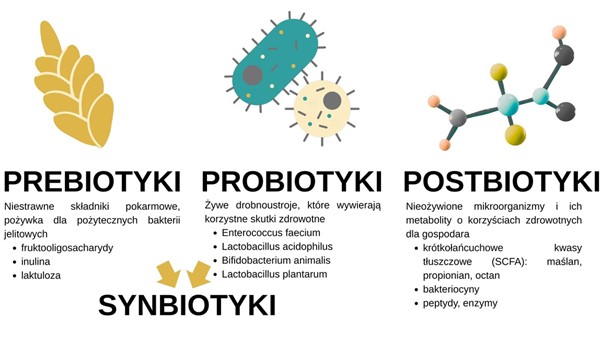
What is the difference between probiotic, prebiotic and postbiotic?
These terms are often used interchangeably, which is incorrect. Probiotics are live microorganisms that, when administered in adequate amounts, have a beneficial effect on the host's health. Their name comes from the Greek "pro bios," meaning "for life." In animals, probiotics primarily colonize the gastrointestinal tract, including the small and large intestines; some strains are also found in the mouth, throat, urogenital tract, and on the skin.
According to the current guidelines of the International Scientific Association for Probiotics and Prebiotics (ISAPP), prebiotics are substances selectively utilized by microorganisms that beneficially impact the host's health. These include carbohydrates from the oligosaccharide and polysaccharide groups (FOS – fructooligosaccharides, MOS – mannanoligosaccharides, inulin, lactulose, cellulose), which are not subject to enzymatic hydrolysis in the upper gastrointestinal tract and reach the large intestine unchanged, where they are metabolized by beneficial bacterial strains and contribute to their proliferation.
Postbiotics are defined as preparations composed of non-living microorganisms and/or their components, demonstrating a documented health effect. These include short-chain fatty acids (SCFAs), such as butyrate, propionate, and acetate; antibacterial peptides, enzymes, polysaccharides, and bacterial lysates. They act directly on the immune system and the intestinal barrier, without the need for live bacteria to colonize the intestines.
Synbiotics are preparations that combine a probiotic with a properly selected prebiotic, which creates a synergy effect and helps bacteria adapt to a new environment.
Vitamins for dogs – why does their absorption depend on the intestines?
The dog's intestines are the site of absorption for many vitamins, especially fat-soluble vitamins (A, D, E, K) and some B vitamins, including B12. Intestinal bacteria are capable of producing some vitamins (B vitamins and vitamin K). The metabolic products of intestinal bacteria help maintain optimal pH in the intestinal lumen. Proper acidification is essential for the absorption of micronutrients. Some commensal bacteria produce enzymes, including phytases, which degrade compounds that limit the absorption of minerals, such as phytate. Bacterial fermentation products (including butyrate) are the main source of energy for intestinal epithelial cells. Vitamin deficiencies are a common problem in dogs, despite being fed a balanced, high-quality diet. This is usually caused by dysbiosis and the accompanying subclinical inflammation. This condition leads to the destruction of the structure of the intestinal villi, increased permeability of the intestinal barrier (so-called "leaky gut") and reduced bioavailability of nutrients.
The best way to address deficiencies is to use appropriate probiotic strains and highly bioavailable vitamins simultaneously. Stabilizing the microbiota restores the integrity of the intestinal barrier, which is essential for optimal supplementation. It's worth using vitamin supplements designed for dogs, such as those offered by ANIMALACTIN – vitamins for dogs.
Tasks of the dog's intestinal flora
The intestinal microbiota is a dynamic and complex ecosystem composed of bacteria, viruses, fungi, archaea, and protozoa. The term "microflora" is historical in nature; microbiota refers to the actual composition of microorganisms, while the microbiome encompasses the genes of all microorganisms inhabiting a given environment, such as a dog's body. The composition of the microbiota is unique to each dog, depending on genetics, age, environment, and diet. The microbiota is responsible for maintaining the body's homeostasis, and its proper microbial balance (eubiosis) is crucial for a dog's health. It also includes potential pathogens, which, if excessively dominant, can lead to dysbiosis.
The primary functions of the intestinal microbiota include neutralizing toxins delivered through food, regulating gastrointestinal pH, and inhibiting the colonization of pathogens through competition for adhesion sites and nutrients. Microbiota regulates numerous physiological processes, including digestion, vitamin synthesis (particularly vitamin K and the B vitamins B1, B2, B12, biotin, and folic acid), bile acid metabolism, and xenobiotic neutralization. Furthermore, microbiota influences the proper differentiation of enterocytes (intestinal epithelial cells) and GALT (Gut-Associated Lymphoid Tissue) cells, which is crucial for the development of the immune response. By producing antimicrobial substances such as bacteriocins and modulating the intestinal environment, it limits the growth of pathogenic microorganisms.
Gut microbiota also participates in maintaining the integrity and integrity of the intestinal barrier, thereby preventing food hypersensitivity reactions. A growing body of research also indicates the involvement of microbiota in the gut-brain axis, where it influences emotional stabilization, stress reactivity, and cognitive processes. Dysbiosis is linked not only to gastrointestinal diseases such as diarrhea, colitis, and inflammatory bowel disease (IBD), but also to metabolic and immunological disorders, as well as behavioral problems.
Probiotics – action and administration
How does probiotic work in a dog's body?.
When administered orally, probiotics must survive the unfavorable conditions of the upper gastrointestinal tract, including the acidic environment of the stomach, and be resistant to digestive enzymes. Strains with proven efficacy are resistant to hydrochloric acid and bile salts, allowing them to reach the small and large intestines in a metabolically active form. Once in the intestines, probiotic strains exhibit the ability to adhere to intestinal epithelial receptors and compete with pathogenic microorganisms for habitation and access to nutrients.
One of the key mechanisms of action of probiotics is the production of metabolites such as lactic acid, bacteriocins, and short-chain fatty acids (SCFAs), including butyrate, propionate, and acetate. Lowering the pH of the intestinal contents creates an environment unfavorable for the growth of pathogens such as Escherichia coli, Clostridium, and Salmonella. SCFAs provide an energy source for intestinal epithelial cells, stimulate the production of a protective mucus layer, and strengthen the integrity of tight junctions between enterocytes, sealing the intestinal barrier and preventing endotoxins from entering the systemic circulation.
Probiotics also influence the functioning of the intestinal immune system by stimulating the activity of gut-associated lymphoid tissue (GALT). They increase the production of secretory immunoglobulin A (IgA), which serves as the first line of defense against pathogens. At the same time, probiotics modulate the inflammatory response by regulating the activity of dendritic cells and T lymphocytes and the balance between pro- and anti-inflammatory cytokines, thereby preventing excessive inflammatory and autoimmune responses.
Additionally, probiotic bacteria support digestion and nutrient absorption. By stabilizing the intestinal microbiota, they improve the bioavailability of vitamins and minerals, participate in the biosynthesis of B vitamins and vitamin K, and regulate bile acid metabolism, which is particularly important in cases of liver and pancreatic dysfunction. Some probiotic bacteria secrete digestive enzymes (e.g., lactase, lipase), which support digestion in the intestinal lumen even before the dog's pancreatic enzymes do. Due to the lack of permanent intestinal colonization, maintaining the beneficial effects requires regular use of probiotic preparations.
When to give probiotics to your dog?
The use of probiotics is an important element of prevention and supportive therapy for gastrointestinal and immune system disorders in dogs and cats. Their use is particularly justified in situations that contribute to intestinal microbial imbalances.
- Antibiotic therapy – antibiotics, in addition to their antibacterial effects on pathogens, also kill beneficial bacterial strains, leading to dysbiosis. Supplementing with probiotics during treatment and for at least a few days after its completion reduces the risk of antibiotic-associated diarrhea and supports the restoration of the intestinal barrier. It is recommended to maintain an appropriate time interval between antibiotic and probiotic administration, unless the manufacturer indicates otherwise.
- Stress – moving, transporting, attending exhibitions, or visiting the veterinarian activate the hypothalamic-pituitary-adrenal (HPA) axis, leading to increased cortisol levels, which causes increased permeability of the intestinal epithelium (leaky gut). Prophylactic use of a probiotic for dogs a few days before the planned event can reduce the risk of stress-related diarrhea.
- Dietary changes – introducing a new food can lead to temporary digestive upset. Probiotics support the adaptation of the intestinal microbiota and enzymatic processes, reducing the risk of diarrhea, flatulence, and excessive fermentation.
- Gastroenterological problems – acute and chronic diarrhea, gas, and bloating – are often caused by dysbiosis. Probiotic supplementation promotes the restoration of eubiosis and supports the local immune response within the GALT, which is important both in therapy and in preventing symptom recurrence. In protein-losing enteropathies (PLE) and inflammatory bowel disease (IBD), probiotics support the microbiota remodeling process, which is essential for restoring intestinal lymphatic function and reducing chronic inflammation of the mucosa.
- Skin diseases – in dogs with atopic dermatitis (AD), probiotics modify the immune response from a Th2 (allergic) profile to Th1, which actually reduces the itch index (CADESI), which in some cases allows for a reduction in glucocorticosteroid doses.
- Urinary tract health – selected strains of probiotic bacteria support the reduction of calcium oxalates, which minimizes the risk of painful kidney stones.
- Perinatal period and lactation – supplementation in female dogs in the last trimester of pregnancy and during lactation allows for the transfer of good bacteria to the offspring, which builds the immunity of puppies from the first days of life.
- Weaning – probiotics protect puppies against dangerous viral and bacterial diarrhea when the immunity passed down from the mother decreases and the mother’s own immunity is not yet fully developed.
- Senior dogs – geriatric patients experience weakened immunity and decreased digestive efficiency. Probiotics stabilize the microbiota, reducing inflammation, improving nutrient bioavailability, and supporting appetite.
How long should you give your dog probiotics?
The timing of probiotic administration is not universal and depends on the goal of therapy, the animal's clinical condition, and the strain used. Although the first clinical effects (e.g., improved stool consistency) are often measurable after 1-3 days, full intestinal colonization is a long-term process. Standard treatment usually lasts 2 to 4 weeks. When rebuilding the intestinal microbiota following antibiotic therapy, it is recommended to continue supplementation for at least a week after treatment to restore microbial balance. The probiotic should be administered at least 2-4 hours after the antibiotic dose to prevent direct inactivation of probiotic microorganisms by the drug present in the intestinal lumen.
In the event of anticipated stress, such as travel, exhibitions, or veterinary visits, it is advisable to begin supplementation a few days in advance. Administration should begin 3-5 days before the planned event and continue for several days after the stressor subsides. In acute conditions, supplementation should typically last 2 to 4 weeks. A sufficiently long period of administration ensures sustained microbiota recovery. In the case of chronic illnesses or immune-mediated conditions such as inflammatory bowel disease (IBD), allergies, or atopic dermatitis (AD), long-term probiotic administration is recommended, even for several weeks or months. Supplementation should extend through the last trimester of pregnancy, lactation, and the puppies' transition to solid food, which typically lasts 4 to 6 weeks.
Depending on clinical indications, probiotics can be used for short-term preventive and supportive treatment purposes or long-term for chronic health problems, always under the supervision of a veterinarian and taking into account the strain dependence of a given preparation.
How to properly administer probiotics to your dog?
Probiotics are best administered with food or immediately after a meal. This increases the survival of bacteria in the acidic environment of the stomach and facilitates their delivery to the intestines in an active form. When concurrently taking antibiotics, it is recommended to leave a 2-4-hour interval between the medication and the probiotic. An exception is yeast probiotics, which are resistant to most antibiotics and can be administered concurrently.
Probiotics are best administered once or twice daily (morning and evening), at regular times. The dose should always be adjusted to the dog's weight, age, health, and strain used. The effectiveness of the treatment depends on regular administration and adherence to the manufacturer's or veterinarian's recommendations. It usually takes 1 to 3 days for beneficial bacteria to colonize the intestines, so for preventative measures or anticipated stress (e.g., travel, food change, surgery), it's worth starting supplementation a few days earlier.
The product should not be exposed to high temperatures or dissolved in hot or boiling water. High temperatures inactivate live bacterial cultures. Products should be stored in a cool, dry place. Some strains require refrigeration to maintain the manufacturer's declared number of viable cells.
The effectiveness of supplementation depends on the strain used, the number of colony-forming units (CFU), and the animal's overall health. In chronic conditions such as inflammatory bowel disease, allergies, or atopic dermatitis, probiotic therapy should be continued long-term and in accordance with a veterinarian's recommendations. It is often necessary to use preparations with a high concentration of colony-forming units. If you have any questions about dosage, product selection, or use with other medications, always consult your veterinarian.
Are human probiotics good for dogs? Can you give your dog a human probiotic?
Probiotics intended for humans are not recommended. These preparations may contain substances hazardous to dogs, such as xylitol, artificial sweeteners, flavorings, and preservatives. Their presence can lead to diarrhea, gastrointestinal upset, and even poisoning. The composition of human probiotics often does not meet the needs of a dog's microbiota. While Bifidobacterium bacteria predominate in humans, strains such as Enterococcus faecium SF68 and carnivore-specific Lactobacillus subspecies play a key role in dogs. A dog's probiotic should be tailored to its body weight, health, and specific gut microbiota.
Human probiotic for dogs
Dogs' intestines have a different pH and a shorter transit time, so probiotic strains intended for humans may not have the expected therapeutic effect in dogs. The concentration of colony-forming units (CFU) is adjusted for body weight, making it difficult to accurately and safely administer the product to small dogs or puppies. Furthermore, the therapeutic dose per kilogram of body weight in dogs is often higher than in humans due to the shorter gastrointestinal tract and faster transit time.
Some human probiotics contain additional excipients, flavorings, colorings, or preservatives that have not been tested for safety in animals and may cause allergic reactions or toxicity. To ensure maximum effectiveness and safety, choose only prebiotics for dogs. These contain strains isolated from healthy dogs, are highly stable in the acidic environment of a dog's stomach, and are free of additives that are harmful to animals.
Which probiotic should you choose for your dog?
A good probiotic for dogs should contain precisely defined and tested bacterial strains whose effectiveness has been confirmed in dogs. The most frequently recommended ones include Lactobacillus acidophilus, Bifidobacterium animalis, and Enterococcus faecium, with the full strain designation, i.e., Enterococcus faecium NCIMB 10415. Simply naming the bacterial genus, such as "Bifidobacterium," is insufficient, as the effectiveness of a probiotic depends on the specific properties of the strain.
The ideal probiotic strain must meet stringent standards:
- The ability to survive in the stomach, where there is a low pH environment, and to be resistant to the action of bile salts.
- The ability to adhere to the intestinal epithelium and compete with pathogens. It should produce metabolites with protective properties, such as lactic acid, short-chain fatty acids (SCFAs), and bacteriocins.
- There are no antibiotic resistance genes located on mobile DNA elements (plasmids, transposons) that could be transferred to other bacteria.
- A certificate confirming that a given microorganism is completely safe for the host organism and does not cause side effects.
The key is the number of live colony-forming units (CFU) present in a single dose of the product until the expiration date, not just at the time of production, as well as information that the preparation has been clinically tested on dogs. A high-quality probiotic should be free of sugars, artificial flavors, colors, or preservatives. Products intended for animals should have appropriate quality and safety certificates and be QPS (Qualified Presumption of Safety) certified, confirming their safety. It's worth choosing synbiotic products, those containing both a probiotic and a prebiotic. The prebiotic provides nourishment for beneficial intestinal bacteria and supports their growth.
The form of probiotic administration for dogs should be tailored to the dog and its daily routine. Capsules, powders, pastes, and treats are available on the market, making regular use easier. Dosage should always be adjusted to the dog's weight, age, and health status. In cases of chronic illness or concurrent medication, it is best to consult a veterinarian about supplementation.
Summary
Conscious probiotic supplementation for dogs is a long-term investment in their health. Maintaining eubiosis, or gut microbial balance, directly translates into proper digestion, better nutrient absorption, a well-functioning immune system, and healthy skin and coat. Choosing the right bacterial strains, their appropriate number (CFU), correct dosage, and a form of administration tailored to the dog's individual needs are crucial. Human probiotics should not replace probiotics for dogs, as they may contain hazardous substances or bacterial strains incompatible with the animal's intestinal microbiota. Both preventative use of probiotics and support for the microbiota during periods of increased stress, chronic illness, or antibiotic therapy contribute to maintaining a dog's long-term health. If you have any questions about which product to choose, consult your veterinarian or a veterinary nutritionist.
Read our other articles:
- How much should a dog eat?
- What can't dogs eat? List of prohibited and harmful foods.
- Can dogs eat bones?
Bibliography
- Grześkowiak, Ł., et al. (2015). Microbiota and probiotics in canine and feline welfare. Anaerobe. DOI: 10.1016/j.anaerobe.2015.04.002
- Hadadi, N., Berweiler, V., Wang, H., & Trajkovski, M. (2021). Intestinal microbiota as a route for micronutrient bioavailability. Current Opinion in Endocrine and Metabolic Research, 20, 100285. DOI: 10.1016/j.coemr.2021.100285
- Haram, K., et al. (2025). Understanding the diversity and roles of the canine gut microbiome. Journal of Animal Microbiome Studies. DOI: 10.1186/s40104-025-01235-4
- Herman, K., Dec, M., Pyzik, E., & Urban-Chmiel, R. (2023). The role of probiotic preparations in the treatment and prevention of diseases of various etiologies in dogs and cats. Weterynaryjny Magazine. https://magwet.pl/38733
- Homer, B., et al. (2023). Gut microbiota and behavioral issues in production, performance, and companion animals: A systematic review. Animals. DOI: 10.3390/ani13091458
- Mondo, E., et al. (2019). Role of gut microbiota in dogs and cats' health and diseases. Open Veterinary Journal. DOI: 10.4314/ovj.v9i3.10
- Purina Institute. (n.d.). The microbiota-gut-brain axis.
- Suchodolski JS: Intestinal Microbiota of Dogs and Cats: a Bigger World Than We Thought. Veterinary Clinics of North America: Small Animal Practice, 2011, 41, 261-272.
- Suchodolski, J. (2022). Probiotics, prebiotics, synbiotics, and intestinal health in dogs and cats. Veterinary Magazine. https://magwet.pl/wpd/37130
- Tsilingiri, K., & Rescigno, M. (2013). Postbiotics: what else? Beneficial Microbes, 4(1), 101-7. DOI: 10.3920/BM2012.0046
- Wynn, S. G. (2009). Probiotics for companion animals. Journal of the American Veterinary Medical Association.